This is the fifth in a six-part series describing my visit to Ethiopia last year. The first part can be found here.
Monday, March 27
I was up at 3:30 am to get everything ready for a departure a little before 5. Our route involved driving east and south, descending out of the mountains (Mekelle is at an elevation of 7,395 feet, or 2,254 meters) into the Afar region through the Danakil Desert, where we would stop for the day in Semera, the regional capital. We chose this route because it had been less involved in the war than our other option through the Amhara region. We knew that there would be fewer checkpoints and less suspicion, making it the safer choice.
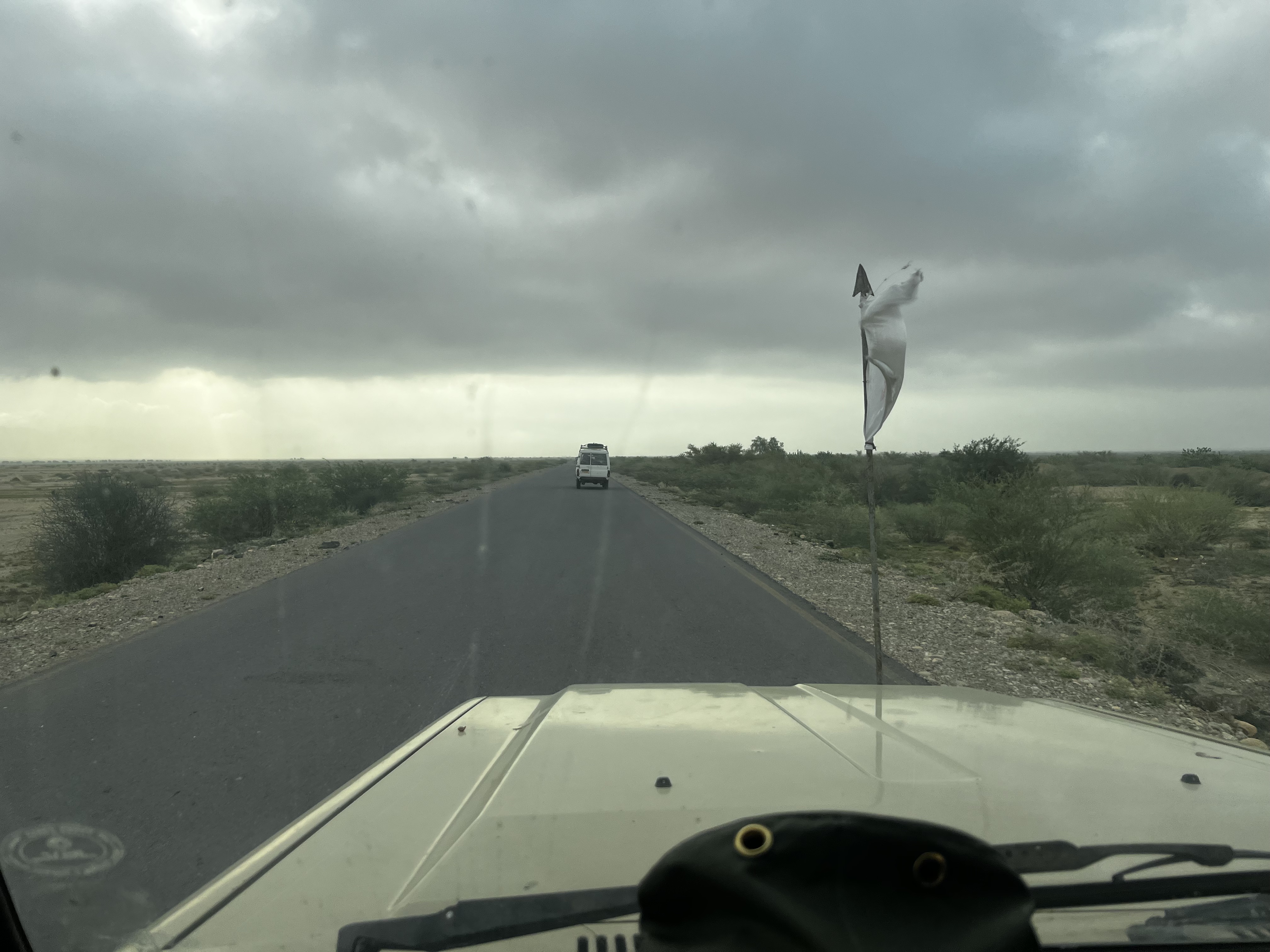
We drove in the dark for nearly two hours, which is probably for the best, as these roads involve hairpin turns on the edge of cliffs – a nerve-wracking drive if you can see how close to disaster you are, and how many vehicles have come to disaster before you. Jon led our little caravan for two reasons: first and foremost, he is the more experienced driver and has made the trip many times. Secondly, his taillights were out(!), so it was better for me to follow (his LandCruiser is white, and I could basically follow the light from his headlights). Following eliminates at least half of the stress of driving distances in Ethiopia, because the follower doesn’t have to worry about the many potential dangers in the road ahead: potholes (or even large gaps in the paved road), rocks/trees/debris (fallen or occasionally placed there intentionally), broken down vehicles in the middle of the road, sheep, goats, cattle, camels, children, adults, and checkpoints, which often consist of a difficult-to-see (especially in the dark) cable stretched across the road. Jon navigated all of these (and more) admirably, making my job much easier.
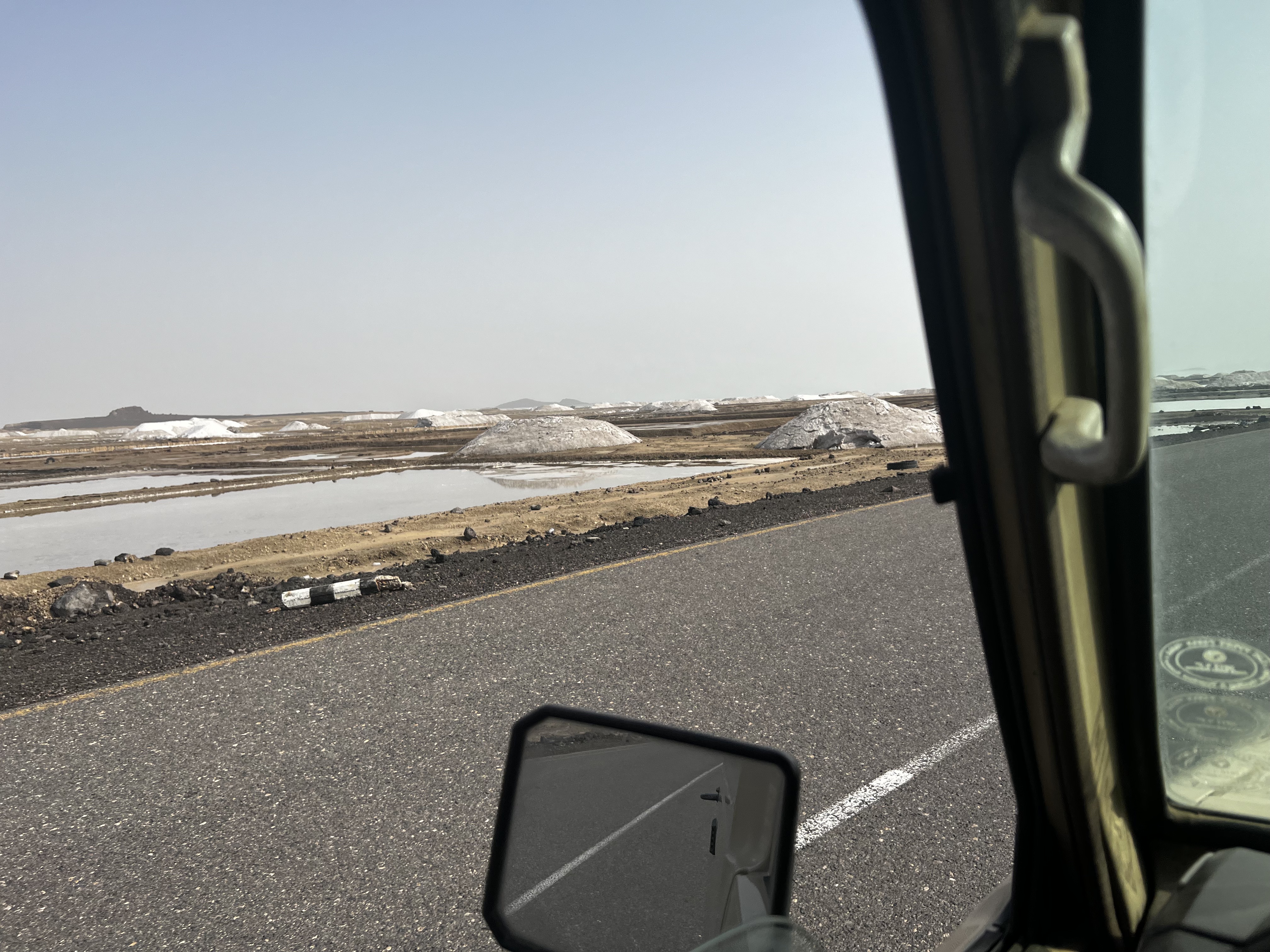
Although we didn’t get to see much of the mountains, as most of the descent occurred in the first couple of hours in the dark, the drive through the northern half of Afar were really fascinating. The variety of landscapes we navigated were truly amazing. Flat stretches of dirt/sand, rocky terrain that looks exactly like Mars, salt plains, scrub land . . . I would have loved to have been able to photograph it, but I was trying to stay close to Jon’s tail and survive the trip in one piece. That land is beautiful, but in a haunting sort of way. It’s so very inhospitable, and I firmly believe that the people in this part of the Horn of Africa have some of the hardest lives (if not the hardest) in the world.
We stopped once about halfway for jebena buna on the side of the road, and we arrived at the hotel in Semera a little after noon. It gets hot in Afar, and the next closest place where we could stay overnight safely and comfortably was Nazret, which would have involved driving through the heat of the day and into the dark. Driving in the evening is particularly dangerous, and is best avoided whenever possible. So we had tegamino and injera for lunch (and for dinner) and we rested in our luxuriously air conditioned rooms that afternoon and evening.
Tuesday, March 28
We were up at four to begin our drive from Semera to Addis Ababa, which is part of the route from Djibouti to Addis. This is the primary means by which goods are transported from the sea to Ethiopia, and so this leg of the journey was inundated with trucks. And since nearly the entire route consisted of two-lane highways, this meant a LOT of very exciting passing maneuvers. It’s quite exhausting for one’s adrenaline to pump for 10 hours straight. In addition to dodging trucks, the baboons on the side of this road were often quite entertaining.
There was a fair amount of rain during this leg of the journey, which was unfortunate because as I’ve mentioned before, my windshield wipers didn’t work. At all. For most of the journey the rain was just light enough and/or infrequent enough that I could proceed comfortably. The last hour or so, however, there is a new 4+ lane expressway that makes for great, safe, fast driving – unless it’s raining and your windshield wipers don’t work. Then it becomes a little stressful. Fortunately there were only about 10 minutes where it was raining so hard the I moved into the slowest lane and followed a truck (which was a visible, slow-moving, comforting blob through the windshield) until I could see better. Then before we knew it we were in Addis, which is by far the most insane place to drive I’ve ever experienced.
This is part five of six of the report of my time in Ethiopia in March 2023.
This is the fourth in a six-part series describing my visit to Ethiopia last year. The first part can be found here.
Sunday, March 26
Sunday morning after Liturgy (which starts a little before 5 am and ends a little after 9), I attended the inaugural ceremony for the Imago Dei Counseling and Training Center, a program that was started in large part by faculty from St. Frumentius Ethiopian Orthodox Seminary, but is in collaboration with other faith-based organizations. Its focus is providing counseling from a faith-based and whole person orientation – something that is especially necessary now, given the trauma that the region has just experienced. I was able to visit with friends at this event, including the Rev. Tesfaye Hadera, dean of the seminary, Prof. Mekonnen ?, and ?, both of whom are former deans. The seminary has played a major role in housing and supporting IDPs as well as providing the Church’s support via Qiddus Mikael, the parish associated with the seminary. To my surprise, I was asked to share a few words at the ceremony. I spoke about benefits on holistic approaches towards health, and how my work combines human, animal, plant, and environmental health. I also sought to encourage the audience, sharing with them that my Orthodox and other Christian community in the States (and elsewhere) have been praying for them, are mindful of ways that they might be able to help, and are eager to do so.
After this I was invited to lunch at Dr. Abrha’s house, where I was able to catch up with his wife, Dr. Merhawit Reda, professor of anatomy at the vet school, and to see how much his children have grown. In addition, Dr. Birhanu (MU’s Vice President of Research and Community Outreach) and Dr. Netsanet Berhe, an epidemiologist at the vet school. We spent hours talking about a variety of things, including and especially what I can do from the States to help the vet school and the people of Mekelle, Tigray, and Ethiopia. They spoke quite frankly about their inability to recommend in good conscience that I bring my family back to Mekelle any time in the near future, and encouraged me to consider how I might be able to serve their community while living in the States. I’m still processing and brainstorming as a result of this conversation, but here are some of the things I would like to pursue:
regular trips to Mekelle in which veterinary professionals come to share their expertise, often in the form of short courses for faculty and/or students
identifying potential research projects (and, of course, funding), especially those that involve collaboration with Western researchers and clinicians
identifying educational and/or professional opportunities for faculty and students from Mekelle at American (or other Western) veterinary or public health institutions
appropriation and transportation of clinical, laboratory, research, and educational equipment and materials to the vet school in Mekelle
*I’d like to do similar things with the seminary as well, although my capacity to help is some of these areas is more limited.
I simply can’t say enough about the dedication, ingenuity, passion, and work ethic of the faculty at the College of Veterinary Sciences. These folks are an inspiration to me, and I thank God that I’ve had the opportunity to become friends and colleagues with them.
I spent the rest of the evening loading our LandCruiser and preparing to drive it from Mekelle to Addis Ababa. Timing for this trip was providential, as Jon, the director of MYC, was planning to make the drive as well in his LandCruiser, and we were able to caravan. Jon had graciously taken our vehicle to a local mechanic, as it had been sitting for essentially three years, and was able to get it up to speed, apart from the fact that the windshield wipers didn’t work (more on that later, but (spoiler alert) rest assured that I survived the trip. Jon and I shared a meal consisting of fuul before getting some sleep prior to our 4am departure time Monday morning.
This is part four of six of the report of my time in Ethiopia in March 2023.Part five can be found here.
This is the third in a six-part series describing my visit to Ethiopia last year. The first part can be found here.
Saturday, March 25
After a breakfast of firfir and coffee at the hotel, Jon, the director of the Mekelle Youth Center (MYC), picked me up and drove me to the place where our vehicle had been stored for the past few weeks. When we arrived in Mekelle in February of 2020, we had arranged to sublet a house that was being rented by a recently married couple who worked at MYC. The husband is American and the wife Ethiopian, and as we were arriving they were preparing to go to the States to begin the process of obtaining her green card. It was an ideal situation, in that it would give us a year to locate a suitable long-term home in Mekelle. When we returned to the States at the end of March, we brought very little with us (two checked bags and two carry-ons) as we expected to return within six or so months. When the war broke out in November, the Ethiopian staff at MYC permitted some Internally Displaced People (IDPs) to live in our home – an arrangement we were happy to accommodate. We made sure they knew that these folks were welcome to utilize our household goods as they saw fit. The boys’ clothes and toys were allocated almost immediately. Very little was left for me to sort through on Saturday morning – primarily our books (mostly my veterinary texts and biblical/theological library, as well as homeschool materials) and a couple of the boys’ sentimental stuffed animals.
As I sorted through what I would bring with me and what I would leave to be given away, I occasionally wished that we had asked them to hold onto this or that item. In the end, though, I was grateful. I knew that any donations we might give now or in the future would not have matched the giving of the vast majority of our household goods in value. It was a way that we, in our weak and sinful materialism, were compelled to be joyfully generous.
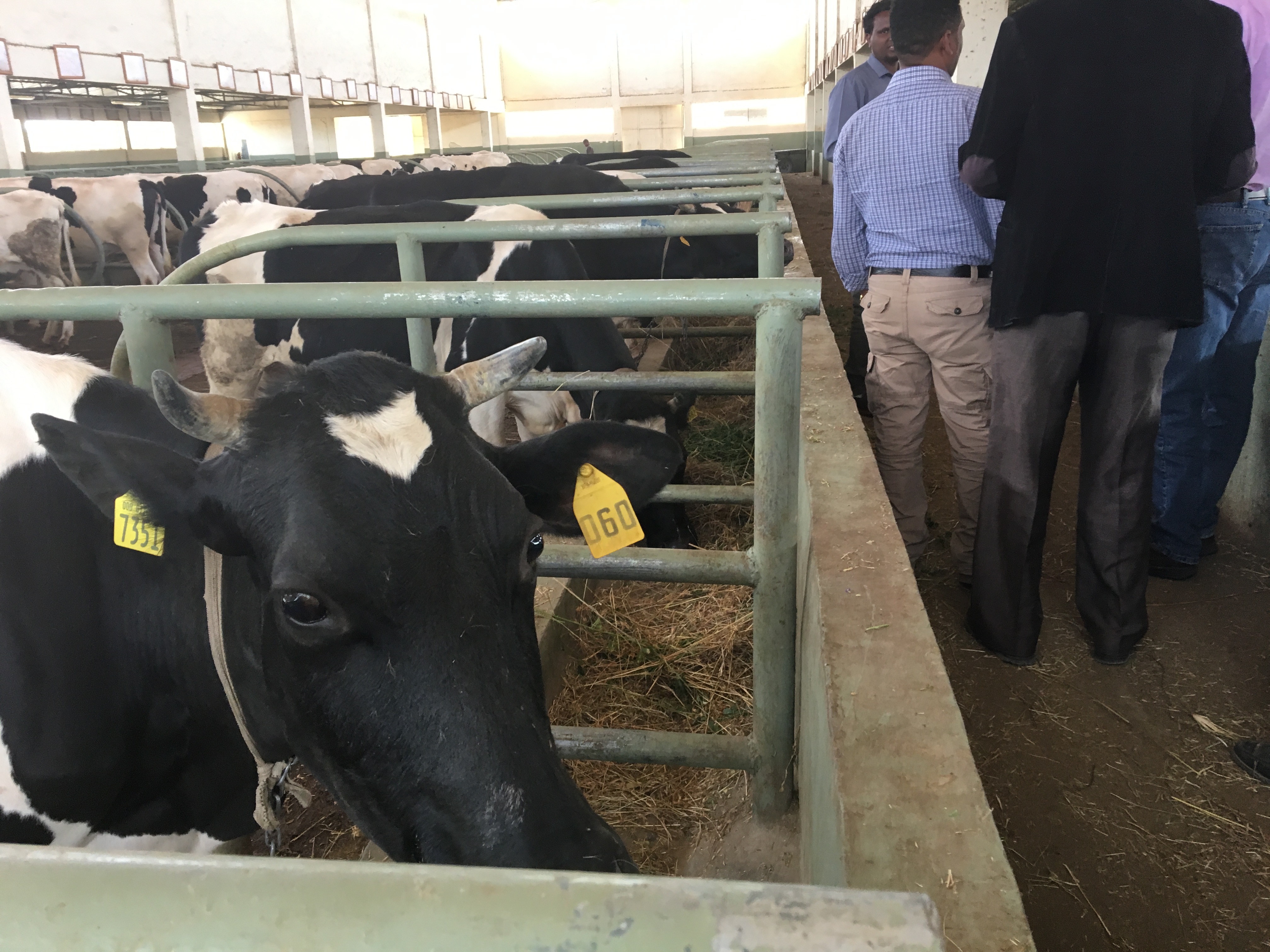
After I’d sorted through our goods and packed what I intended to bring back to Iowa, I met with Dr. Abrha, the dean of the vet school, for lunch. Interestingly, as strict as the Ethiopian fast is, they don’t fast regularly from fish, and we shared some wonderful fish with injera before Abrha gave me a tour of the section of Mekelle where the vet school is located, an area with which I was familiar in the past, but that has changed dramatically in the last three years. The most profound and moving aspect was that this is an area where injured people are convalescing, and the number of folks with visible injuries was extremely sobering. Most of the buildings at the vet school, including the clinic, the labs, and student housing are currently housing IDPs and convalescents. Abrha showed me the college’s animal housing, where only a handful of dairy cows remain. Since my first trip to Mekelle in 2015, I’ve seen the dairy facilities being built and the herd maintained over several years. The milk is sold locally, and the animals are used for a variety of research and clinical training purposes (a common role for university dairies when a vet school is present). The inability to provide adequate feed for the cows during the war resulted in the loss of a number of animals and a massive drop in the body condition of those that did survive as a result of the veterinary staff’s steadfast perseverance and dedication to keep these animals alive. The same could not be said for the sheep, goats, and poultry. Finally, and on a more positive note, Abrha proudly showed me where families had been given plots of land throughout the campus where they could grow crops to feed themselves and others. This urban cultivation was a critical means of feeding the city during the conflict. I had dinner at the hotel (tegameno and injera), and spent some time in the lobby that night visiting with three members of the veterinary faculty who had visited Ames at various times over the past few years as part of the USDA Foreign Agriculture Service’s Faculty Exchange Program, in which faculty from veterinary colleges in the developing world spend a semester at a U.S. vet school collaborating and learning more about American styles of pedagogy and curricular development.
This is part three of six of the report of my time in Ethiopia in March 2023.Part four can be found here.
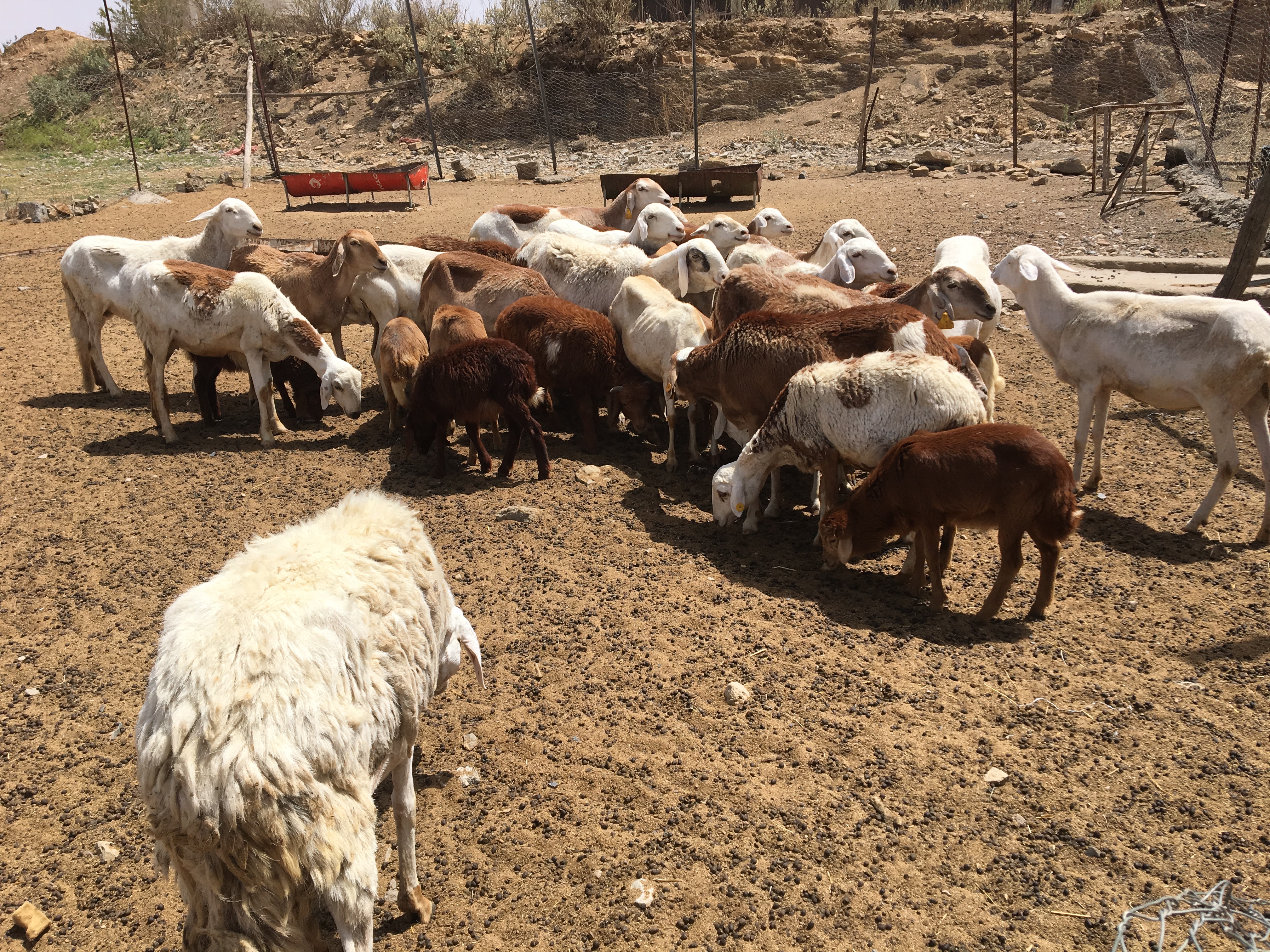
Sheep at Mekelle University College of Veterinary SciencesDairy Cows at Mekele University College of Veterinary Sciences
This is the second in a six-part series describing my visit to Ethiopia last year. The first part can be found here.
Friday, March 24
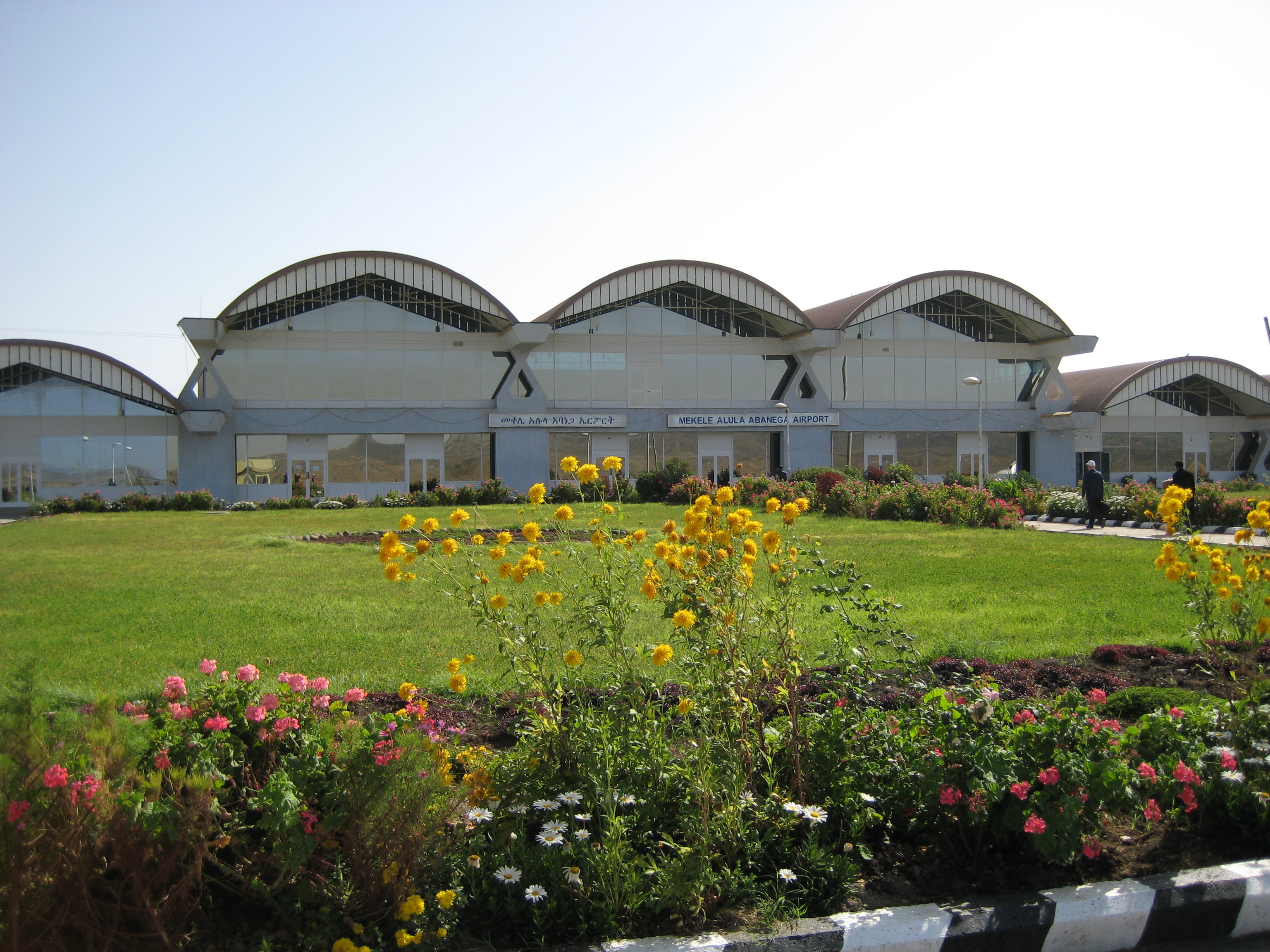
We left for the airport at 5:30, and after a rushed (but wonderful) breakfast of bread and coffee in the terminal we caught our flight to Mekelle. Because of the mountainous terrain and the numerous road hazards that I’ll discuss later, it takes about 17 hours to drive from Addis Ababa to Mekelle. Flying, however, takes about an hour.
Alula Aba Nege Airport, Mekelle
We were picked up by Dr. Abrha Bsrat, the dean of Mekelle University’s College of Veterinary Sciences, who took us to our hotel, Libanos. There are a number of businesses that were nearly complete when the war began in November 2020, and so when the peace agreement was signed in November 2022 those that hadn’t been damaged were able to open. One neighborhood in particular, because it houses many NGOs and other international and humanitarian organizations, was spared much of the destruction that other parts of the city suffered. Libanos is located here, and being essentially brand new was easily the nicest hotel I’ve stayed at in Mekelle. Affordable, too, at 1500 birr ($27.75) a night.
Fred and I spent much of the morning in the lobby of Libanos with Drs. Abrha, Birhanu Hadush (a colleague from the vet school who has recently been appointed Mekelle University’s Vice President for Research and Community Services), and Mituku Haile, former president of MU from 2000-2010. We had an enlightening discussion about the University’s experiences during the war, which included a major role in housing and caring for Internally Displaced People (IDP). Mekelle’s population more than doubled when hundreds of thousands of people from outlying areas were forced from their homes due to violence. Our hosts were justifiably proud that, despite the loss of facilities (more on that below), loss of faculty and staff who left to play a role in the Tigrayan Defense Force (TDF), and a complete loss of funding, electricity, and telecommunications for over two years, the College of Veterinary Sciences published more than 20 scientific papers in peer-reviewed journals, and is ranked 4th among Ethiopian universities according to the ranking web of universities. To be clear – faculty have not been paid since November 2020, yet they continue to work to the absolute best of their ability and to serve the college and its mission.
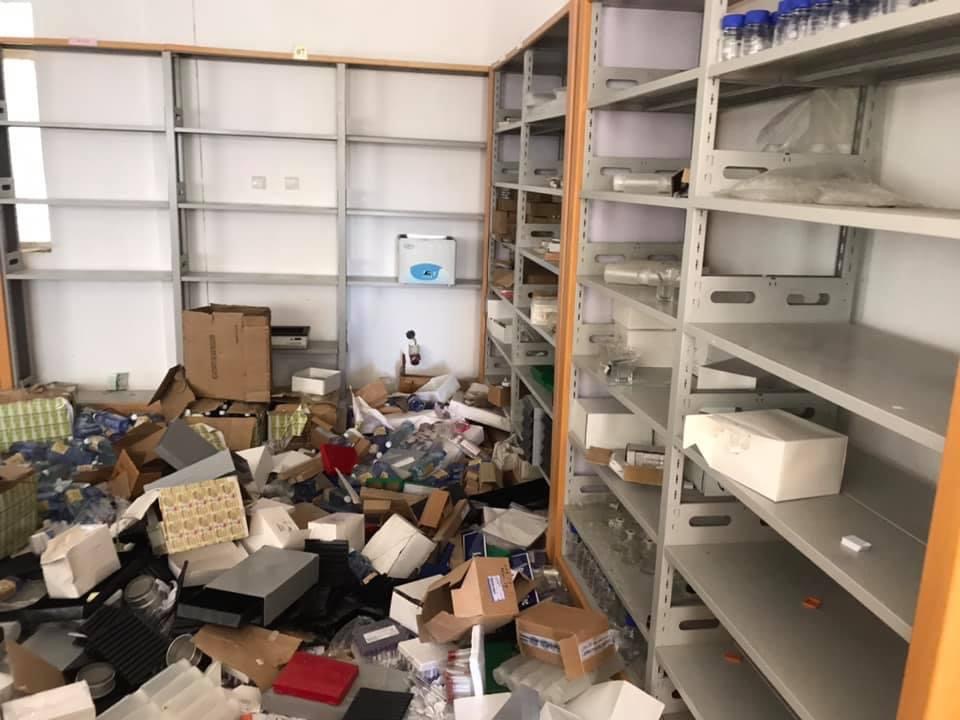
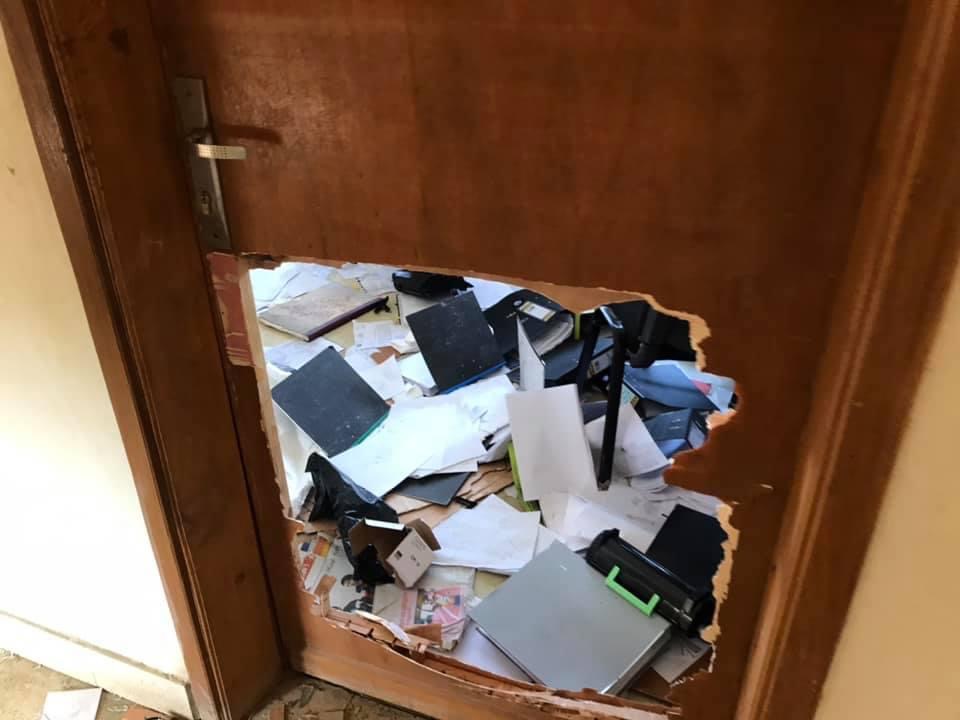
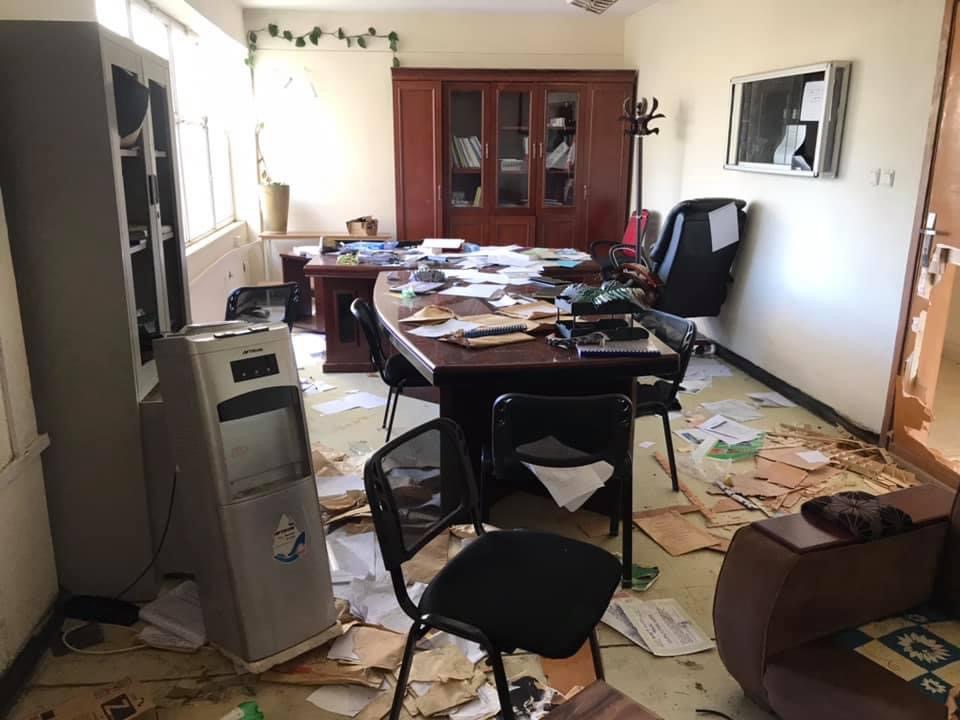
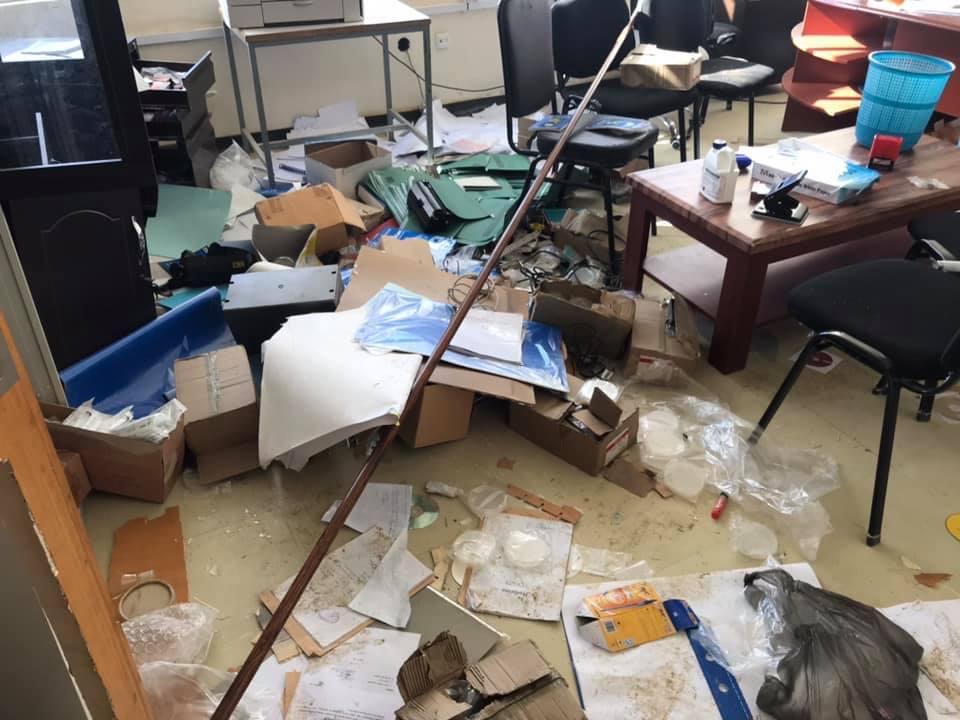
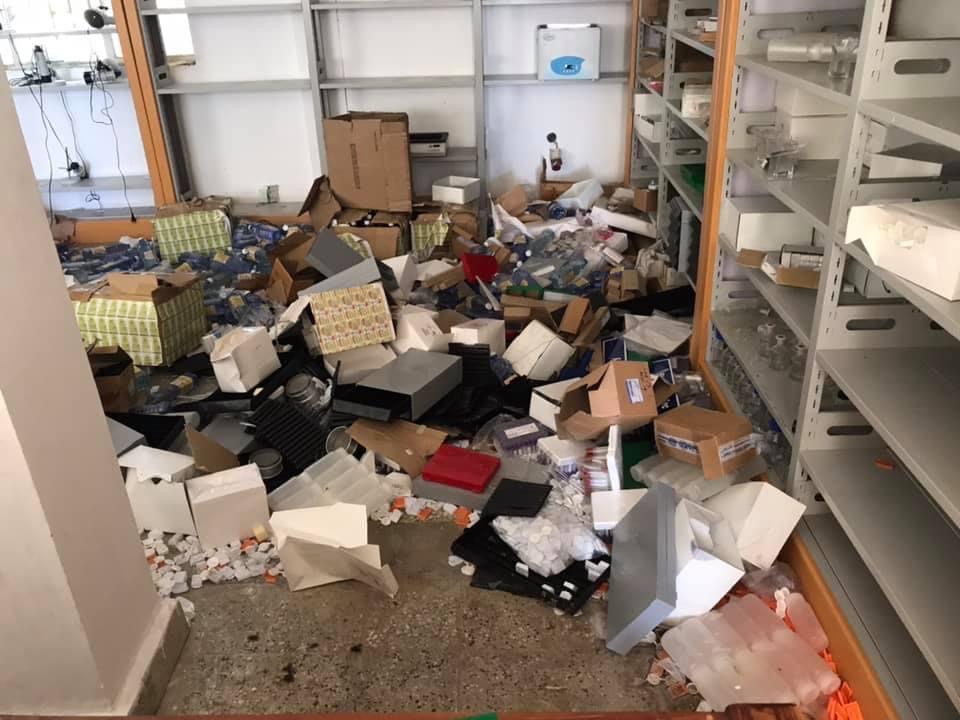
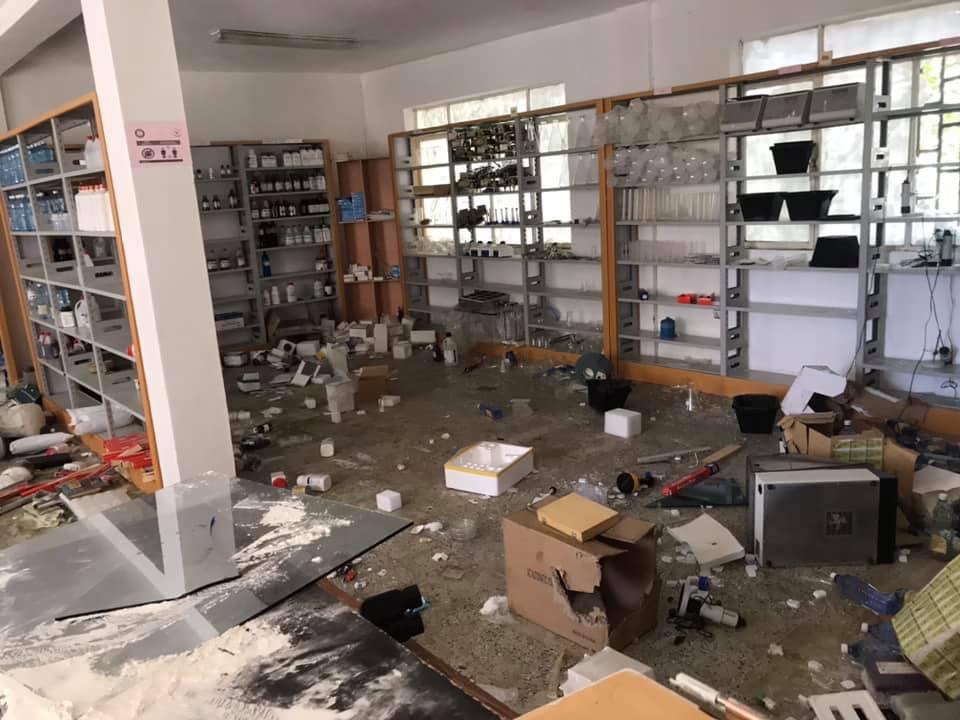
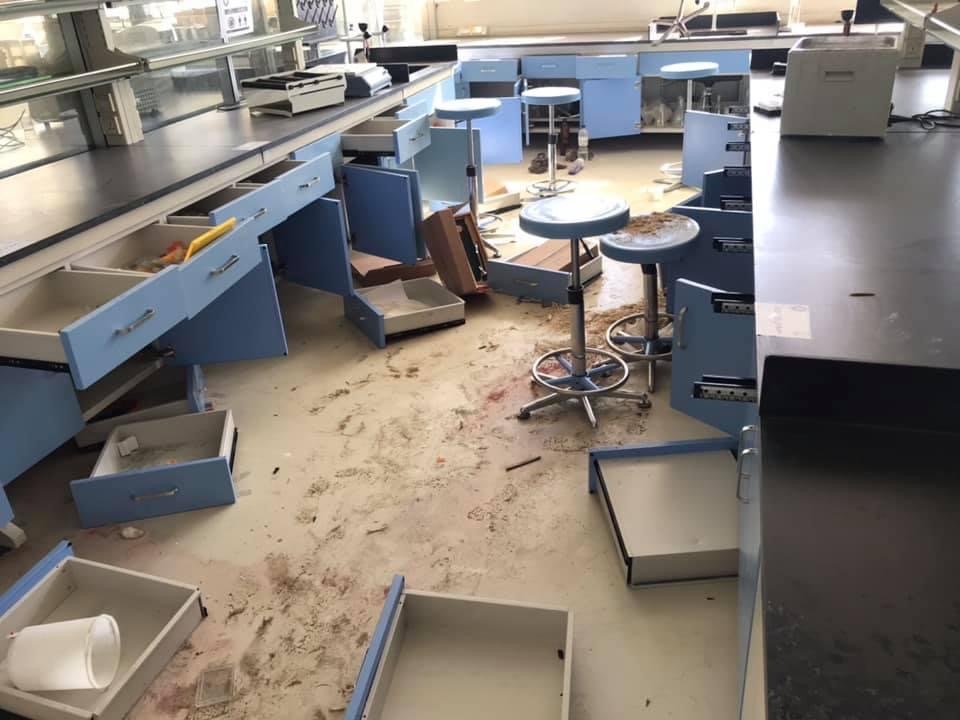
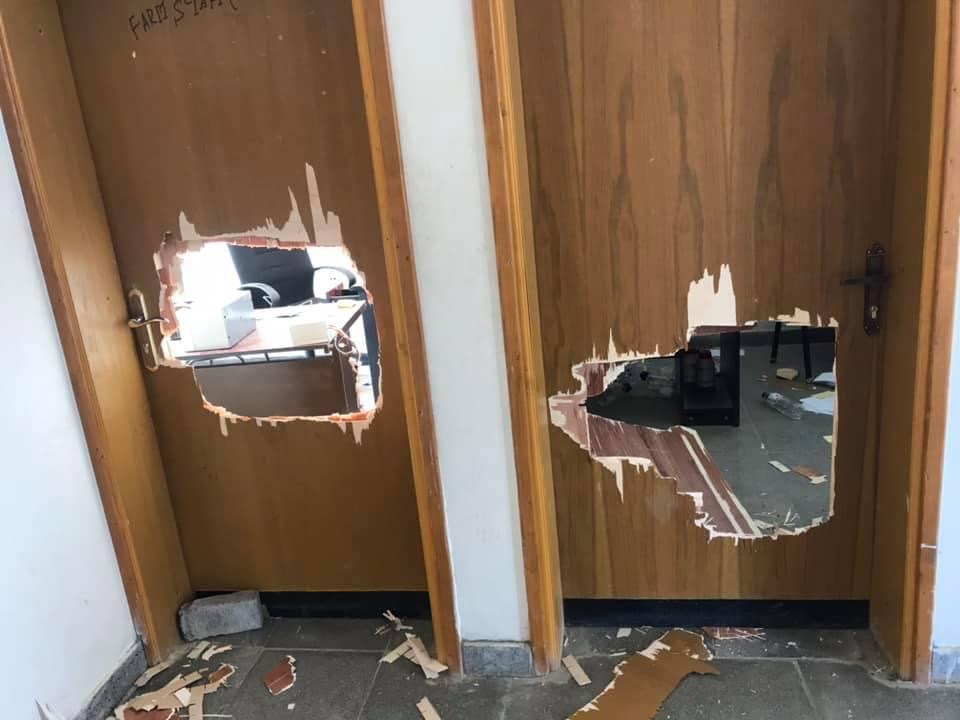
On a more sobering note, they shared with us the devastation that the College of Veterinary Sciences campus underwent when Mekelle was overtaken by occupying forces in late 2020, shown in the attached photos. We discussed the need for classroom, office, clinical, laboratory, and research equipment, which had all been destroyed, as well as for the need for faculty to catch up on more than two years of progress in their respective fields, as they have in large part been unable to keep up with publications, attend conferences, and simply stay abreast of trends due to lack of internet access. I’m currently brainstorming ways that folks here in the U.S. might be able to help out; if you have any suggestions, please reach out and let me know.
After our meeting with the folks from MU, we visited the Mekelle Youth Center (MYC) to learn about the experience of the staff and children during the conflict. The staff at the center are truly inspiring. They did all they could to remain open when it was deemed safe to do so in order to give local children a place to have community and obtain some sense of normalcy – an extremely important aspect of well-being, as I’ll discuss later. They were able to offer a variety of sports and exercise programs, as well as more cultural programs involving music and theater. We discussed the war’s impact on children, including bombings in which children were injured and killed. One story was particularly painful, in which a young girl who was a regular attendee was killed when a falling bullet came through the rook of her house and struck her in the head.
We then had lunch with the family of the Van Gorkoms’ Tigrayan colleague, consisting of a variety of fasting Ethiopian food. The children received candy from the States, which ended up being their main course, and we heard from the family’s matriarch about their experience over the past three years – not only has money been essentially unavailable due to the closure of all banks during the war, but inflation has been huge and the destruction and looting of most food producers in Tigray, combined with the inability to import any food into the region due to the siege, has led to the doubling or even quadrupling of food prices. Hunger and the lack of medicines and medical supplies have been the norm, and folks in the city readily admit that Mekelle has suffered the least within Tigray. We were given gifts as we departed – Tigrayan white honey and an Abyssinian white linen cloak called a gabi, the garment typically worn when attending an Ethiopian Orthodox service. Charlie ended up wearing this one (and using it as a blanket when he passed out) during our Paschal vigil.
The rest of the afternoon was devoted to much needed rest back at the hotel, followed by dinner of firfir at a small nearby restaurant. I made arrangements for the following day and promptly fell fast asleep.
This is part two of six of the report of my time in Ethiopia in March 2023.Part three can be found here.
This post is shamefully long overdue. I wrote this series last April, immediately after returning from Ethiopia after three years of absence and minimal contact. My heart was equal parts warmed and broken. Warmed by the resilience and selflessness I’ve witnessed among the people I’ve come to know and love over the last several years. Broken, having seen a level of suffering that until recently was so horrific that it was necessarily abstracted in my experience. Writing it out made the reality nearly unbearable; thinking about publishing it here was just too hard. But I think that it’s time.
It looks like our extended experience of transition and relative instability may be coming to a close in the very near future, and that a time of setting down roots is approaching. This is the beginning of this current phase in the life of our family.
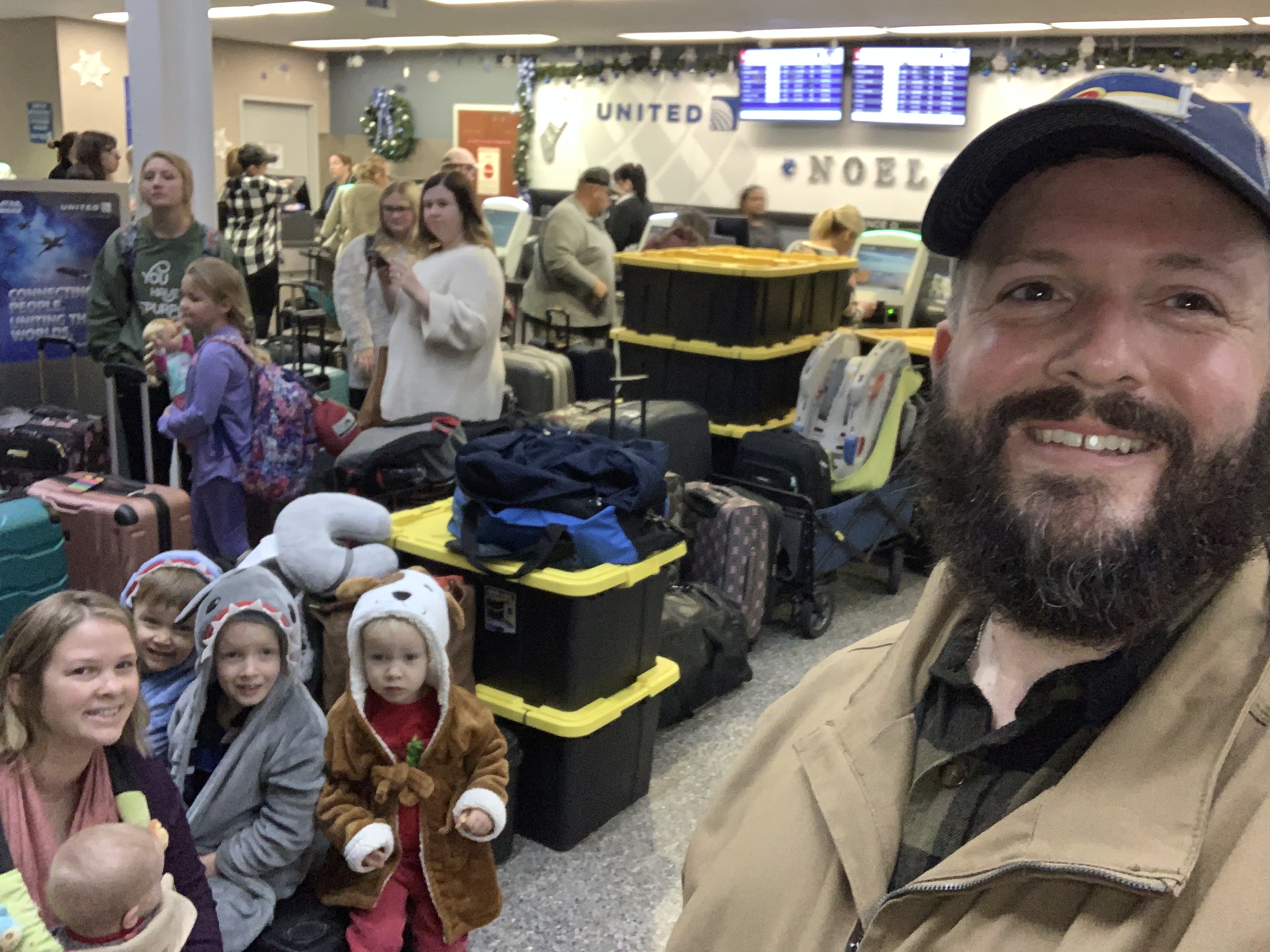
We arrived in Addis Ababa on December 28, 2019, with 21 pieces of checked luggage, six carryon bags and six personal items. Our plan was to spend the next three years learning how to live in Mekelle, how to build community there. We left Mekelle for the States on March 24, 2020 with two checked bags, two carryon bags, and two personal items, fully expecting to return within a few months at most. I arrived in Addis Ababa on March 23, 2023 – one day shy of exactly three years from when we left. I returned to the States six days later, on March 29, with what was left of our household goods – three checked bags, one carryon, and one personal item.
Tulsa International Airport, December 2019. I only took a few photos on this more recent trip, which I’ll share over the course of this series. In the meantime, given the connection to our experience four years ago,I thought these photos appropriate.
My goals for this trip included 1) reconnecting with our friends and colleagues in Mekelle; 2) comparing the reported accounts of events that had occurred over the past three years with firsthand accounts; 3) determine whether we might be able to return in early 2024; 4) determine how we might be able to serve the people of Mekelle, Tigray, and Ethiopia from a home base in the States; and 5) determine which household goods to bring back to the States, and which to give away, as well as determine what to do with our 1991 LandCruiser.
My goal with this post is to share in detail the events of this trip, so that our supporters (and everyone else) can know as clearly as possible – that is, as clearly as we know – our plans for the future of Hands Outstretched. For those who don’t have the time and/or inclination to read the details, here’s a summary:
Tuesday, March 21
Kristen and the boys drove me to Des Moines midday, whence I flew to O’Hare and took a United flight to Frankfurt.
Wednesday, March 22
I arrived in Frankfurt early the next morning, and enjoyed a 12-hour layover at that fine establishment until my evening flight on Ethiopian Airlines to Addis Ababa.
Thursday, March 23
I was scheduled to arrive in Addis Ababa at 6 am on Thursday. However, thanks to a dense bed of fog covering the city, the plane looped the loop for about 90 minutes until it was safe to land. I had been concerned with my visa status, because just prior to our departure in 2020 we had obtained our resident visa status, which can only be renewed in country, and was therefore expired. I was advised my folks in the know to obtain a tourist visa online, but because of a slight kerfuffle in travel arrangements a few days before I left, the tourist visa authorized me to arrive on March 24. This resulted in several long conversations with several levels of immigration, consisting in profuse apologies on my part, as well as expressions of willingness to do whatever necessary to make it right. I was told more than once that I’d have to wait in the terminal until March 24 – another 16 hours. By the grace of God, because I could show that I was leaving the country the following week, I was allowed to pass through immigration without doing that particular penance. I picked up my luggage containing gifts for folks in Mekelle without incident and took a taxi to the guesthouse that I typically stay at in Addis.
The guesthouse in Addis Ababa, December 2019.
I spent the morning catching up with Yimenashu, the woman that runs the guesthouse, and setting up my Ethiotelecom (ETC) account so that I could use my phone in country. Ethiopia has a state-run telecom service, and to use it, you have to go to an ETC office and register for a SIM card. Once you have the card, you can add credit by either visiting an ETC office or by purchasing cards from vendors that have a scratch-off code that you enter on the phone. I had the ETC SIM card that I’d been using when we left. I’ve been told that most of the time if a card has been out of service for more than six months ETC will cut it off, requiring another trip to an ETC office. Thankfully that wasn’t the case for my card, and I was able to add credit using the scratch-off cards, and was able to make several phone calls to folks in Mekelle and plan the details of my trip.
Thursday afternoon Fred and Vicki Van Gorkom arrived at the guesthouse. Fred is the Missions Deputy Director of Christian Veterinary Mission. He and Vicki served in Ethiopia for more than 20 years before moving to Seattle to serve as CVM administrators. My trip coincided with a trip they were making with some friends, one of whom was from Tigray. We shared a nice dinner of injera with yetsom beyenatu, after which I showered and promptly fell very, very asleep.
This is part one of six of the report of my time in Ethiopia in March 2023.Part two can be found here.
For those coming here for more details about my trip to Mekelle this past March, I’ll have them posted ASAP. If you’re willing to receive email notifications, enter your email address on the right-hand side of our home page, and you’ll be notified as they’re posted. I apologize for the delay.
In a surprisingly short amount of time, the opportunity to visit Ethiopia presented itself. I arrived a little over 12 hours ago, and I expect to return to Iowa in just under a week. I’ll be comfortable giving more details when I return, but let me say that this is going to be a tough week for a lot of reasons. Prayers are most certainly needed and appreciated.
I did not get a letter written in time for CVM to prepare and send it prior to Christmas; in fact, I technically didn’t get it submitted in time for them to send it in January, but those gracious and hard-working folks made it happen, and we thank God for them. Here is an advance copy of the letter that you will receive if you have signed up in the past:
To Our Beloved Family and Friends, and to Those Who Have United Themselves to Christ Alongside Us –
Because we have temporarily transferred from full-time fieldworker to affiliates with Christian Veterinary Mission, we have not been writing monthly prayer letters until it is time to prepare to head back overseas. In the meantime, we’ll only write occasionally via CVM’s letter system. I (John) will hopefully be more active on our blog, which is located at www.thecoatneys.com. If you like, you can subscribe to the blog, so that you’re notified via email when I publish a new post. The subscribe feature can be found on the homepage’s right-hand column.
I’m writing on December 15; this letter will therefore reach you after Christmas day, but likely before the end of the Christmas season (i.e., during the last half of the 12 Days of Christmas), on the Feast of Theophany, or Epiphany in the West. I pray that you all have had a blessed holiday season and a blessed celebration of the Nativity of Our Lord, and that continues in the celebration of his baptism and/or the visit of the Magi.
I’m sorry that we haven’t been in closer or at least more consistent contact. I acknowledge that the combination of doubling our family in 2019, moving to Ethiopia, being compelled to come back to the States, and being unable to return while watching many suffer whom we’ve come to love has thrown me for a loop. I find myself more easily distracted, more prone to despair or self-pity. I find the routine exercise of thanksgiving a useful and live-giving balm, but alas, one that I fail to practice as consistently or sincerely as would most benefit me.
We are currently renting the parsonage owned by Holy Transfiguration Orthodox Church, the parish here in Ames. It’s a lovely home, in an ideal location, and we are blessed and grateful for it, and for the parish. The project funding my salary at Iowa State University College of Veterinary Medicine and the National Institute for Anti-Microbial Resistance Research and Education (NIAMRRE) has been extended until the end of 2023, and so we will remain in Ames at least that long. It pains me to report that my PhD thesis has continued to drag on. I had hoped and scheduled its completion and defense at the end of November, but some of the data analysis required that I extend it until (hopefully) the end of February. Significant progress has certainly been made over the past year, and there is a beautiful light at the end of the tunnel.
News from Ethiopia contains a glimmer of hope, as a peace deal was signed between two of the warring parties in early November. It remains to be seen whether or to what extent the deal will be upheld, though, and in the meantime war, famine, and suffering continues. Please pray for peace and the relief of suffering in Ethiopia. I may be able to make a trip this spring if the situation allows for it; I will certainly keep you all posted.
Meanwhile, the boys are thriving and Kristen’s schooling has borne much fruit. Charlie (3rd grade) has become an avid and advanced reader; Easton (1st grade) has the mind and passion of an engineer – a builder with remarkable talent and insight, as well as a natural athlete. Judah (Kindergarten) is our ladies’ man and gifted snuggler, and Titus (3 y.o.) is as tough as nails and determined to keep up with the brothers. Activities abound, including P.E. and enrichment classes, sports of all kinds (Jiu Jitsu, soccer, flag football, T-ball, basketball), 4-H, and piano lessons.
We love you all. We pray for you every evening. Your support and love and encouragement mean more to us that words can say.
Thank you for all you do for us,
John, Kristen, Charlie, Easton, Judah, and Titus
Kristen and the boys sitting with faculty from veterinary schools in Kenya and Uganda. They participated in a faculty exchange this past semester at Iowa State.
I was asked recently what veterinary medicine has taught me about theology, and vice versa. I thought perhaps folks might be interested in my answer:
A few key points:
1. St Maximos the Confessor’s concept of Microcosm and Mediator has taught me that part of our telos as human beings is to mediate God’s grace to the rest of creation, and to offer that act of mediation and its fruits back to God in thanksgiving. I believe that we are meant to do that with animals in an especially significant way because of all that we have in common with them.
2. As a veterinarian, the ability to prevent, mitigate, and heal animal disease (and suffering, including through euthanasia) is a sacred gift and obligation, especially in light of the fact that their suffering is due to our sin. It has completely changed the way that I understand the effect that my sin has not only on other people, but on creation in general.
3. Working with animals with a focus on the relief of their suffering necessarily involves an awareness of the owner’s relationship with the animal, and the relationship of the animal’s suffering with the owner’s suffering, and vice versa. The concept that human health and animal health (often called One Health) are intricately connected is a key (maybe the key) concept taught in veterinary medicine. Proper practice of veterinary medicine includes both the fact that humans are set apart from other animals due to our bearing the image of God, and the fact that we are very like other animals due to our being made from the dust/mud of the earth.
4. I owe Fr Stephen De Young for how I now articulate this, but the seed of this idea has been with be for a few years now.
It’s entirely possible, perhaps even likely, that our relationship with domesticated animals, and with companion animals in particular, demonstrates a form of “sub-theosis” whereby animals become more human in a way symbolic of the way that humans become divine. If, as Tolkien understood, we are sub-creators because we are made in the image of the Creator, then perhaps we are sub-deifiers because we are made in the image of the Deifier.
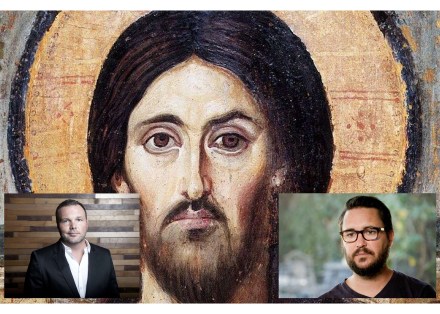
TL;DR: If you are someone who’s relationship to Christ has been damaged by “the hype, entertainment, and expressions of power that drive evangelical life”; if you are someone who wants to know who this person Jesus of Nazareth really is, and what he’s really about; if you are a non-believer as a result of experiencing ways in which Christianity appears to have caused harm rather than blessing to others – please, let me invite you to experience the pursuit of the knowledge of and unity with Jesus Christ by way of a medium that may appear somewhat foreign, antiquated, overly complicated and/or overly simplified, but unquestionably beautiful: the Orthodox Church.
I’ve been listening to a podcast called “The Rise and Fall of Mars Hill,” written and narrated by Mike Cosper and published by Christianity Today. Here’s how the podcast is described on its website:
When Mars Hill Church was planted in Seattle in 1996, few would have imagined where it would lead. But in the next 18 years, it would become one of the largest, fastest-growing, and most influential churches in the United States. Controversy plagued the church, though, due in no small part to the lightning-rod personality at its helm: Mark Driscoll.
By 2014, the church had grown to 15,000 people in 15 locations. But before the year was over, the church collapsed. On January 1, 2015, Mars Hill was gone.
Hosted by Mike Cosper, The Rise and Fall of Mars Hill explores the inside story of this church, its charismatic leader, and the conflicts and troubles that brought about its end. You’ll hear from insiders and experts, tracing the threads of this story to so many others that shape the church today.
The podcast is very well done, although it is unapologetically one-sided – there is little to no defense of Driscoll’s cult of personality (although Cosper continues to invite Driscoll to come on the podcast, to no avail). There is an assumption that the way Driscoll handled things was wrong, and this is not really questioned (to be sure, the evidence presented in the podcast indicates that this assumption is correct). The bigger questions are why Driscoll and the folks at Mars Hill did what they did and made the decisions that they made, how they justified those decisions, how the congregation responded to those decisions, and how these actions conform to a pattern that can be seen in the wider evangelical world.
The podcast is a microcosm of many of the problems currently facing American evangelical Christianity. The podcasters are clearly seeking to learn from these mistakes and to apply these lessons so as to correct for the deficiencies and red flags that become apparent in hindsight following what happened to Mars Hill and the like.
As I’ve been listening to this podcast over the last few weeks, I also encountered a post on Facebook by Wil Wheaton, an actor who played Ensign Wesley Crusher in Star Trek: The Next Generation, and whose career was revived when he began playing himself in The Big Bang Theory. Wheaton’s politics and worldview are largely typical of your standard celebrity; I follow him because of his pop culture posts, nostalgia (he also played the lead in the 80’s coming of age movie “Stand By Me”), and because he often posts about board games.
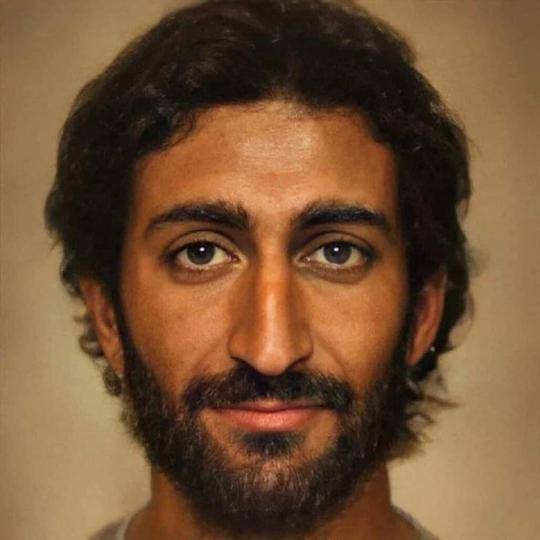
Anyway, on October 2, 2021, Wheaton posted this “photo” of Jesus of Nazareth, which has been making the rounds on social media, created by Dutch photographer Bas Uterwijk using digital technology called Artbreeder, which takes data like geographical and temporal information into account when creating an image. Wheaton used this “photo” to contrast who Jesus actually was with his own perception of how Jesus has been portrayed by American Christianity – especially through the lens of his own personal experiences at parochial school:
I am an atheist. I do not believe in god, or the devil, or heaven, or hell. But I like and respect this guy. He was a rebel, he was an antiauthoritarian, he dedicated his life to helping the poor, the sick, the indigent, the people who were discarded and rejected by society. He hung out with sex workers and lepers, and gave comfort to the sick and suffering, and he loudly and relentlessly called out the hypocrisy of the church and its leaders. As I understand it, he was like, “Hey, you’re a sinner. That’s a bummer. Let me help you be a better person. No, I don’t expect anything from you for that. I just want to be as loving as I can be.” He was a really cool guy.
Now, as someone who has spent countless hours studying how words are used (especially words used to describe God), my first inclination is to correct the places in Wheaton’s comments where his wording might be less than accurate. However, when I stop and look at his words through the lens of someone who believes they’ve been burned by “American Christianity” and as a result has probably never been motivated and able to learn about who Jesus really is, Wheaton’s description makes sense. And most importantly, Wheaton’s portrayal describes someone he wants to know. And where he’s off the mark, the correct wording doesn’t necessarily change that. Jesus is someone whom this atheist – who has nothing but negative associations with Christianity – would nevertheless like to know. That’s actually incredible!
What if there was a community whose purpose was to know Jesus and to become more like him in the ways in which atheists like Wil Wheaton are drawn to him? To show the world who he is in a way that manifests him in beauty, goodness, and truth? What if this community didn’t come with the baggage that burdens much of Western Christianity (see, however, the crucial caveat below)?
Episode 8 of “The Rise and Fall of Mars Hill” is entitled “Demon Hunting”:
Using the lesser-known Mars Hill “demon trials” as a backdrop, Cosper explores the Pentecostal origins of Driscoll’s deliverance ministry, examines the extrabiblical rules that governed Mars Hill spiritual warfare, and considers our longing to hear from God and see him move in our midst.
The narrative of the podcast is often interspersed with music that fits the mood of the message that the narrator is seeking to convey. As I was driving to work earlier this week, and as Episode 8 was wrapping up, I was surprised to hear an Orthodox setting of the “Our Father” (The Lord’s Prayer) playing. Cosper’s voiceover bowled me over:
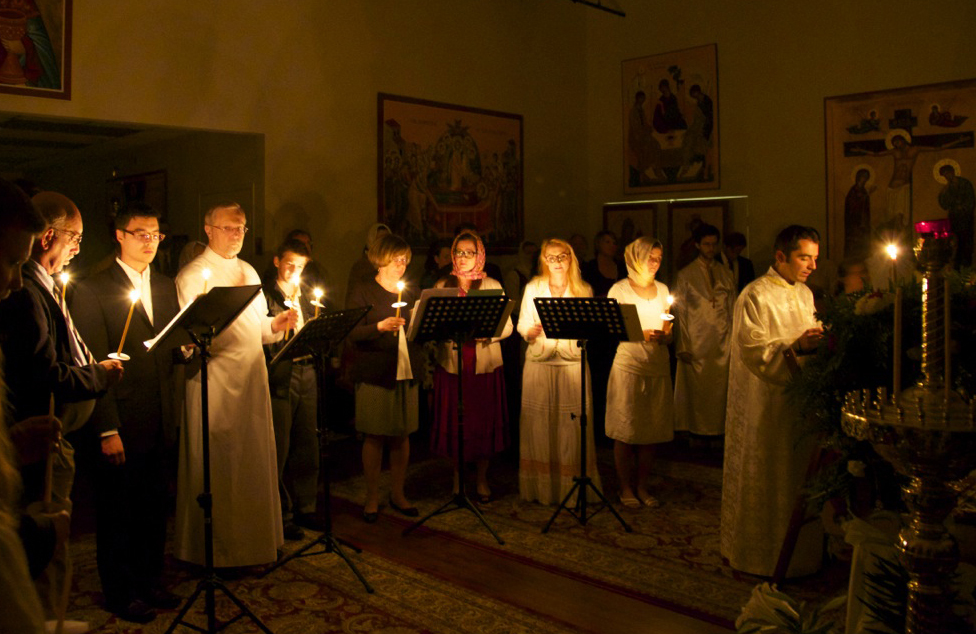
A few years ago, a friend of mine captured this audio in Sitka, Alaska. It’s from a monastery where throughout the day the monks gather to pray the hours, and are often joined by members of the community. Their lives are a day-in, day-out rhythm of work and prayer, full of the normal human drama that we all have, along with their vows. I think of it when visiting this story, because it’s such a contrast. It’s a life designed in many ways to eliminate hype and spectacle, because while these chants are beautiful, they’re simply a routine. The heart of the community is the rhythm, the desire to place your life before God at a steady pace, and to trust he’s doing work over that long, slow obedience. I don’t think we should all become monastics, but I think that along with the imagery of Revelation 12, the imagery of the monastery, and the rhythms of the hours, the commitment to a way of life is a provocative contrast to the hype, entertainment, and expressions of power that drive evangelical life.
I was shocked to hear Cosper offer this as the alternative to the dumpster fire that he’d been describing for the past eight episodes. Not shocked because it’s wrong, but because it’s exactly right. “The imagery of Revelation 12, the imagery of the monastery, the rhythms of the hours, the commitment to a way of life…”; this is the Way that I discovered in the Iraqi desert in the spring of 2009! We don’t all become monastics, but this Way has gleaned and granted to its members over 2,000 years of experience in how to apply this “monastic” way of living to the world of families, children, work, distraction, temptation, and the rest. Cosper hits the nail right on the head: “The heart of the community is the rhythm, the desire to place your life before God at a steady pace, and to trust he’s doing work over that long, slow obedience.” This is exactly what the Orthodox Church offers its members; this is what drew me to the Church.
Please note that this is not directed towards those of you who are members of communities that effectively enable you to grow in Christ. This post wasn’t written to encourage anyone to leave a church where they are being led to know Christ and be united to him. This post is for those who don’t feel like they fit into an American Christian community because of past experiences or cultural hangups. Let me assure you (and here is the caveat mentioned above) that my Church, too, is made up of sinners, and that we have our own baggage (and in some cases, baggage that has resulted from our encounters with American Christianity).
But the way in which we approach knowing Jesus…! If this is something you want, but have been burned by a Mars Hill-like experience – let me encourage you to discover the Orthodox Church and our steadfast dedication to better answering the question “What think ye of the Christ? Who do you say that I am?” Wil Wheaton says, “He was a really cool guy.” It’s a start. But there’s so, so much more.










 Hands Outstretched